

The white red jersey has become one of the most recognizable and enduring color combinations in professional sports worldwide. From European football clubs to North American hockey teams, this striking palette commands attention on the field, ice, and court while conveying both tradition and modern design sensibilities. Whether you're a team manager seeking new uniforms, a fan looking for authentic replicas, or a designer exploring color theory in sportswear, understanding the appeal and technical considerations of white and red jerseys provides valuable insights into sports branding, fan psychology, and performance apparel.
The Psychology Behind White and Red in Sports Uniforms
Color selection in sports jerseys extends far beyond aesthetics. Research into colour–emotion correspondences reveals that red consistently evokes feelings of energy, passion, and dominance across cultures, while white represents purity, clarity, and neutrality. When combined in a white red jersey, these psychological associations create a powerful visual statement that resonates with athletes and supporters alike.
The dominance of red in competitive contexts has been studied extensively. Teams wearing predominantly red uniforms have demonstrated measurable psychological advantages in certain scenarios, with opponents perceiving red-clad athletes as more aggressive and formidable. White, conversely, offers exceptional contrast and visibility, making players easily distinguishable during fast-paced gameplay.
Fan Identity and Color Loyalty
According to research published in Frontiers in Psychology on sport fans’ loyalty, jersey colors play a fundamental role in building fan identity and community belonging. The white red jersey becomes more than apparel-it transforms into a symbol of shared values, historic victories, and collective pride. Fans who invest in team colors demonstrate stronger emotional connections to their clubs, attend more games, and purchase additional merchandise over time.
This emotional attachment explains why certain color combinations endure for decades. Teams that maintain consistent white and red schemes build generational loyalty, with families passing down jerseys and allegiances through tradition and shared experience.

Historical Evolution of White Red Jerseys Across Sports
The adoption of white and red in team uniforms traces back over a century, with different sports and regions developing distinct traditions. In football, numerous European clubs established red and white kits during the late 19th and early 20th centuries, often reflecting regional flags, civic heraldry, or founding members' preferences.
According to Cambridge research on football jersey evolution, institutional factors-including local identity, commercial considerations, and competitive differentiation-drove early color choices. Teams sought distinctive appearances that would set them apart from rivals while honoring geographic and cultural roots.
North American League Adaptations
In North American sports, the white red jersey gained prominence through different pathways. The NHL's Washington Capitals, for example, have featured various iterations of red and white throughout their history, as documented in the official Capitals jersey timeline. Each redesign balanced tradition with contemporary design trends, maintaining core color identity while updating logos, striping patterns, and material technologies.
Baseball and basketball leagues similarly embraced white home jerseys with red accents, establishing conventions that persist today. The home-white, away-color tradition meant that white red jerseys became standard home uniforms for many franchises, ensuring consistent visual identity during home games.
| Sport | Common White/Red Usage | Notable Examples |
|---|---|---|
| Football/Soccer | Home or away kits with red primary, white secondary | Bayern Munich, Arsenal, Ajax |
| Ice Hockey | Home whites with red trim or away reds | Detroit Red Wings, Washington Capitals |
| Baseball | Home whites with red details | St. Louis Cardinals, Cincinnati Reds |
| Basketball | Various combinations | Chicago Bulls, Houston Rockets |
Design Principles for Effective White Red Jerseys
Creating a successful white red jersey requires careful attention to proportion, contrast, and regulatory compliance. Professional designers consider multiple factors that influence both aesthetics and functionality.
Color Distribution and Balance
The ratio of white to red significantly impacts visual impact. A predominantly white jersey with red accents conveys elegance and sophistication, while a red-dominant design with white trim projects boldness and intensity. Design teams typically experiment with several distribution patterns:
- Equal division: Vertical or horizontal splits creating balanced visual weight
- Accent approach: One dominant color (70-80%) with the other as trim and details
- Pattern integration: Incorporating both colors through stripes, chevrons, or geometric elements
- Sublimation techniques: Gradients and fades that blend white and red seamlessly
Modern adidas designs, such as the 2023-24 FC Bayern München ‘Munich is Red and White’ home jersey, demonstrate sophisticated approaches to color distribution. The kit features red as the primary body color with white accents strategically placed to enhance brand elements and create visual flow.
Regulatory Requirements and Compliance
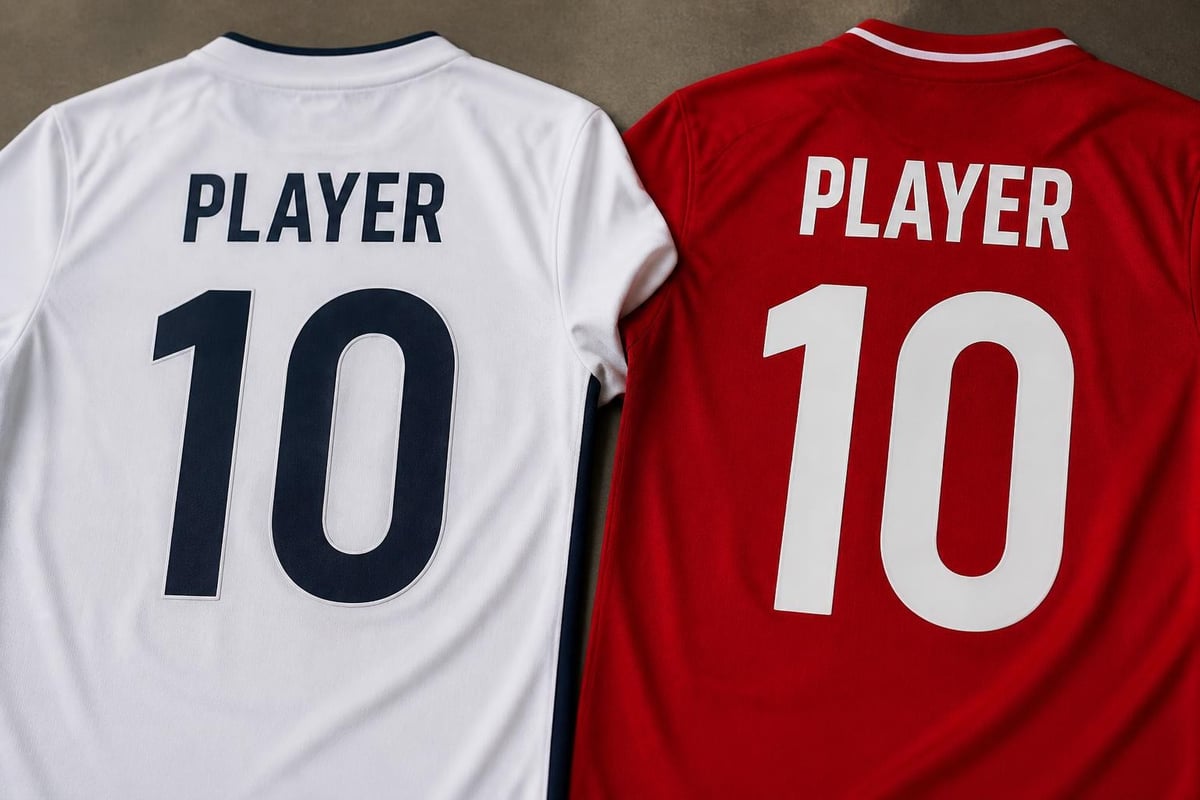
Professional and amateur leagues enforce strict equipment regulations that govern white red jersey designs. UEFA Equipment Regulations specify detailed requirements for color contrast, legibility of numbers and names, and approval procedures. Designers must ensure sufficient contrast between jersey colors and the applied lettering-if the jersey body is red, white numbers must meet minimum size and stroke-weight specifications for visibility.
Similarly, FIFA Equipment Regulations mandate that teams provide alternative kits when color clashes occur, defining "dominant color" classifications that determine when substitution is necessary. A white red jersey might be classified as either white-dominant or red-dominant depending on the proportion of each color in the primary viewing area.
Material Selection and Manufacturing Considerations
Contemporary white red jersey production involves sophisticated textile engineering and quality control processes. The materials chosen directly affect performance, durability, appearance retention, and environmental impact.
Performance Fabrics for Modern Jerseys
Today's athletic jerseys utilize advanced polyester blends designed for moisture management, temperature regulation, and durability under intense physical demands. White and red fabrics each present unique manufacturing considerations:
White fabric challenges:
- Maintaining brightness and preventing yellowing over time
- Stain resistance and cleanability
- Opacity to prevent show-through of undergarments
- UV stability to prevent discoloration
Red fabric considerations:
- Colorfastness to prevent fading and bleeding
- Consistency across production batches
- Heat tolerance during sublimation printing
- Resistance to abrasion and pilling
Premium manufacturers employ solution-dyed fibers rather than piece-dyed fabrics, embedding color molecules during fiber production rather than applying dye afterward. This process yields superior colorfastness and reduces water consumption, addressing both performance and sustainability concerns.
Sustainable Manufacturing Practices
Environmental consciousness increasingly influences jersey production decisions. According to Adidas Group sustainability reporting, major manufacturers now incorporate recycled polyester derived from post-consumer plastic bottles into performance sportswear. A typical white red jersey might contain 50-100% recycled content without compromising technical performance.
Sustainable production of white and red jerseys also addresses water usage, chemical treatments, and end-of-life recyclability. Brands pursuing circular economy models design jerseys for disassembly, enabling component separation and material recovery when the garment reaches end-of-use.
| Material Aspect | Traditional Approach | Sustainable Alternative |
|---|---|---|
| Fiber source | Virgin polyester from petroleum | Recycled polyester from PET bottles |
| Dyeing process | Conventional batch dyeing | Solution-dyed or waterless dyeing |
| White fabric treatment | Optical brighteners and bleach | Natural whitening and minimal chemicals |
| End-of-life | Landfill or incineration | Take-back programs and recycling |
Customization Options for White Red Jerseys
Personalization transforms a standard white red jersey into a unique garment reflecting individual identity or team cohesion. Modern customization technologies offer unprecedented flexibility in adding names, numbers, logos, and additional design elements.
Lettering and Numbering Techniques
Professional-grade customization employs several application methods, each with distinct characteristics:
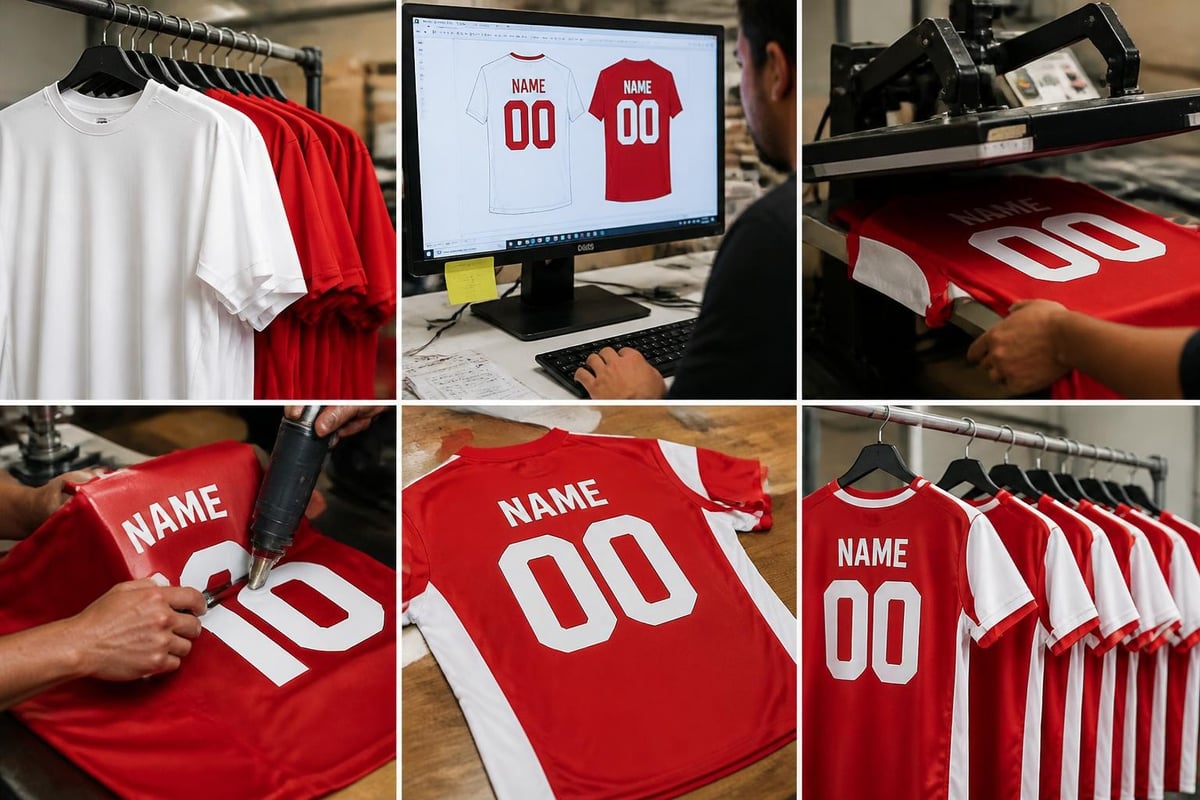
Tackle twill stitching represents the gold standard for authentic jerseys. This method uses layered fabric letters and numbers sewn directly onto the jersey with zigzag or straight stitching. Tackle twill offers exceptional durability, three-dimensional texture, and the authentic appearance of game-worn uniforms. On a white red jersey, white tackle twill on red fabric (or vice versa) creates bold contrast and premium aesthetics.
Heat-pressed vinyl provides a more economical alternative, using pre-cut vinyl characters bonded to fabric through heat and pressure. While less durable than stitching, quality vinyl applications withstand repeated washing and maintain appearance for recreational use.
Sublimation printing embeds designs directly into polyester fibers, creating permanent, lightweight graphics that won't crack or peel. This technique works best on white or light-colored fabrics, making it ideal for white portions of a white red jersey design.
Team Uniform Coordination
Organizations outfitting entire teams with white red jerseys face additional considerations beyond individual customization. Successful team uniform programs address:
- Size range inclusivity: Ensuring availability from youth sizes through extended adult dimensions
- Numbering systems: Establishing consistent number assignments and font specifications
- Matching components: Coordinating shorts, socks, and warm-up gear in complementary white and red
- Timeline management: Allowing sufficient production time for custom work, typically 2-4 weeks
- Budget optimization: Balancing quality expectations with per-unit cost constraints
Teams often order sample jerseys to evaluate fit, color accuracy, and customization quality before committing to full-team orders. This practice prevents costly errors and ensures satisfaction with the final white red jersey appearance.
Broadcasting and Visual Technology Considerations
The rise of high-definition broadcasting, replay technology, and automated player tracking systems has introduced new requirements for jersey design. Research published in Nature Scientific Reports on automated player identification demonstrates that jersey color significantly affects computer vision algorithms used for broadcast analysis and sports analytics.
Contrast and Camera Performance
White red jerseys perform exceptionally well under broadcast conditions. The high contrast between white and red registers distinctly across various lighting conditions and camera systems. Broadcast producers favor clear color differentiation because it enhances viewer experience, reduces visual confusion during fast gameplay, and enables more accurate automated processing.
Stadium lighting, whether natural daylight or artificial illumination, interacts differently with white and red fabrics. White reflects light evenly, maintaining visibility under diverse conditions, while red absorbs certain wavelengths and can appear darker under specific lighting temperatures. Professional jersey designers work with broadcast consultants to test color selections under game-day lighting conditions.
Player Tracking and Analytics
Modern sports analytics increasingly rely on optical tracking systems that identify individual players through jersey characteristics. A well-designed white red jersey facilitates accurate player identification by providing:
- Strong edge detection between jersey and background
- Consistent color values across different viewing angles
- Minimal color overlap with field/court surfaces and opponent uniforms
- Clear number visibility for broadcast close-ups and automated recognition
Teams investing in performance analytics benefit from jersey designs optimized for both human viewing and machine vision processing, ensuring that white red jerseys contribute to rather than hinder data collection efforts.
Cultural Significance and Global Variations
The meaning and associations of white red jerseys vary significantly across cultures and geographic regions. Understanding these nuances helps teams, manufacturers, and retailers connect more effectively with diverse audiences.
European Football Traditions
In European football culture, certain white red jersey combinations carry deep historical significance. Clubs founded over a century ago often selected colors reflecting civic identity, religious symbolism, or founding members' preferences. These choices became inseparable from club identity, creating emotional connections spanning generations.
Red and white combinations appear prominently in national team kits as well, representing countries including Poland, Switzerland, Austria, and Peru. For these nations, the white red jersey embodies national pride and sporting excellence on the international stage.
North American Adaptations
North American leagues approach white red jerseys through different cultural lenses. The tradition of white home jerseys in hockey, baseball, and basketball created associations between white uniforms and home-field advantage. Teams incorporating red as a primary or accent color leveraged this convention while building distinctive visual identities.
Marketing and merchandising considerations also influence color selection in North American contexts. Franchises recognize that jerseys serve dual purposes as performance apparel and retail products, leading to design choices that maximize both on-field functionality and commercial appeal.
Maintenance and Care for White Red Jerseys
Preserving the appearance and performance of white red jerseys requires proper care protocols. Different materials and customization techniques demand specific maintenance approaches.
Washing and Stain Removal
White portions of jerseys present particular challenges, showing stains and discoloration more readily than darker colors. Best practices include:
- Pre-treating stains promptly before washing to prevent setting
- Washing separately or with similar colors to avoid dye transfer
- Using cold or warm water rather than hot to preserve fabric elasticity and color
- Avoiding chlorine bleach on polyester fabrics, which can yellow whites and damage fibers
- Air drying or using low heat to prevent shrinkage and preserve applied graphics
Red fabrics benefit from color-preserving detergents and inside-out washing to minimize friction on the visible surface. Tackle twill customization withstands machine washing better than heat-pressed vinyl, though both require gentle cycles and appropriate water temperatures.
Long-Term Storage
Off-season storage affects white red jersey longevity. Proper storage prevents yellowing, fabric degradation, and shape distortion:
- Store clean jerseys in cool, dry locations away from direct sunlight
- Use breathable garment bags rather than plastic, which can trap moisture
- Avoid folding along customized areas to prevent creasing or cracking
- Hang jerseys on appropriate hangers that support shoulder construction
- Keep white and colored garments separated to prevent color transfer
Professional teams often employ specialized garment management systems, but recreational players and collectors can maintain jersey quality through consistent attention to these fundamental care principles.
Sizing and Fit Considerations
Achieving proper fit in a white red jersey enhances both comfort and appearance. Modern jerseys offer various fit profiles designed for different use cases and body types.
Fit Categories and Their Applications
Authentic/Pro-cut jerseys replicate the slim, performance-oriented fit worn by professional athletes. These jerseys feature:
- Tailored construction with minimal excess fabric
- Shorter sleeves and body length
- Performance stretch for unrestricted movement
- Designed to be worn over minimal base layers
Replica/Fan-cut jerseys provide a more relaxed, casual fit suitable for everyday wear:
- Roomier through the chest and waist
- Standard sleeve and body proportions
- Comfortable for wearing over t-shirts or light layers
- More forgiving across diverse body types
Custom-tailored options accommodate specific requirements including extended sizes, modified proportions, and adaptive features for athletes with disabilities. Quality custom jersey providers offer comprehensive size charts with multiple measurement points to ensure accurate fit.
Measuring for Optimal Fit
Accurate measurement prevents sizing errors and dissatisfaction. Key measurements for white red jerseys include:
- Chest circumference at the fullest point
- Sleeve length from center back neck to wrist
- Body length from high shoulder to desired hem
- Shoulder width across the back
- Waist and hip measurements for fitted styles
When ordering custom jerseys, providing measurements for the intended wearer rather than relying solely on standard size designations produces superior results. Growing youth athletes benefit from sizing that allows room for growth without compromising current performance.
Market Trends and Consumer Preferences
The sports apparel market continues evolving, with white red jerseys adapting to changing consumer expectations and technological capabilities.
Retro and Heritage Designs
Nostalgia-driven demand for vintage white red jersey designs has created a substantial market segment. Teams and manufacturers reissue classic designs from successful seasons or historic eras, appealing to long-time supporters and collectors. These retro jerseys often command premium prices while generating renewed interest in team history and tradition.
Heritage designs balance authenticity with modern performance requirements. A retro white red jersey might replicate the visual appearance of a 1980s design while incorporating contemporary moisture-wicking fabrics and improved construction techniques.
Limited Editions and Special Releases
Scarcity and exclusivity drive consumer interest in special-edition white red jerseys. Teams release commemorative designs for:
- Championship anniversaries
- Stadium inaugurations
- Special events and tournaments
- Charitable causes and awareness campaigns
- Collaboration with designers or cultural institutions
These limited releases generate excitement, media coverage, and sales spikes while reinforcing brand relevance and emotional connections with supporters.
The enduring appeal of the white red jersey across diverse sports and cultures demonstrates the power of thoughtful color selection, quality manufacturing, and emotional resonance in athletic apparel. Whether you're outfitting a competitive team, building a personal collection, or seeking the perfect fan gear, understanding the design principles, customization options, and cultural significance of white and red combinations enables more informed decisions. When you're ready to create your perfect white and red uniform with authentic tackle twill lettering, professional stitching, and any size or personalization you need, My Size Jersey delivers custom-made jerseys for all major leagues at competitive prices that honor both tradition and individual expression.